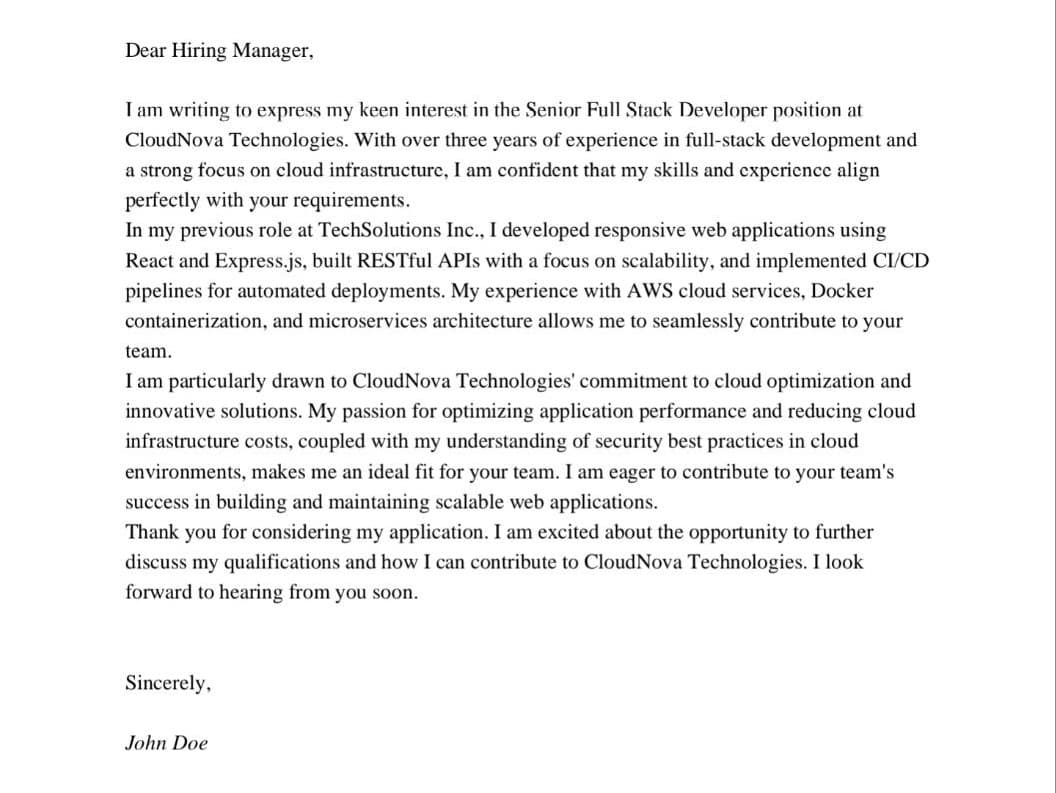
Applying for jobs involves two critical documents: your resume and cover letter. But what is the actual difference, and when do you need both? Many candidates waste hours perfecting one while neglecting the other, or worse, submitting mismatched documents that tell different stories.
Our AI Resume Builder solves this by creating perfectly matched resume and cover letter pairs that work together seamlessly. Our data shows candidates who submit coordinated applications get more interviews than those with generic or mismatched documents.
Do You Always Need Both?
Understanding when each document is required (or optional) can save you time and improve your results.
When Both Are Essential
- Formal corporate applications with stated requirements
- Career change situations where you need to explain transferable skills
- Competitive positions where standing out is critical
- When specifically requested in the job posting
- Executive and leadership roles where communication skills are tested
When a Resume Alone Is Enough
- Quick apply online portals with no cover letter field
- High volume hiring (retail, hospitality, entry-level)
- Internal promotions where your work is already known
- Networking referrals where the referrer will provide context
- When the posting explicitly says "resume only"
When a Cover Letter Is Especially Important
- Small companies where culture fit matters greatly
- Creative industries where writing skill is part of the job
- When you have employment gaps that need explanation
- When changing industries and need to connect the dots
- When you are particularly passionate about the company or role
When You Can Skip the Cover Letter Entirely
Despite what many career guides say, skipping the cover letter is often the right choice. If the application system has no upload field for a cover letter, do not force one in. If you are applying to more than 20 jobs per week, your time is better spent tailoring your resume than writing individual cover letters. If the job is highly technical where skills assessments and portfolios matter more than writing, a cover letter adds little value. And if the posting clearly states "cover letter optional," treat that as permission to skip it. A rushed, generic cover letter hurts more than no cover letter. Be strategic about when you invest the time.
Which One Recruiters Read First (And Why It Matters)
The reading order depends on the application method.
Email Applications
- Typical flow: Cover letter (email body) then Resume (attachment)
- Recruiter sees: Cover letter first, then decides whether to open the resume
- Implication: Cover letter must hook interest immediately
Online Application Portals
- Typical flow: Resume (ATS scan) then Cover letter (if resume passes)
- Recruiter sees: ATS-filtered resumes first, cover letters for top candidates
- Implication: Resume must pass ATS to get the cover letter read
Referral Submissions
- Typical flow: Resume (sent by referrer) then Cover letter (if requested)
- Recruiter sees: Resume with referral context, cover letter as a supplement
- Implication: Resume is still critical, cover letter adds depth
Examples of Each Document in Action
See how they work together with real examples.
The Resume Version (Factual)
Marketing Manager | TechCorp | 2019-2023
- Increased social media engagement by 150% through targeted content strategy
- Grew email list from 10,000 to 50,000 subscribers in 18 months
- Managed $500K annual marketing budget with 25% ROI
The Cover Letter Version (Narrative)
"At TechCorp, I developed and executed a social media strategy that increased engagement by 150%. This experience taught me the importance of data-driven content decisions analyzing what resonates with specific audience segments and adjusting our approach accordingly. I am particularly excited about applying this analytical approach to your target market at [Company Name], especially given your recent expansion into [specific market or product]."
Common Integration Mistakes to Avoid
Repeating Resume Verbatim
Problem: Cover letter just rephrases resume bullet points
Solution: Cover letter should provide context, not repeat facts
Contradictory Information
Problem: Different dates, job titles, or achievements
Solution: Ensure perfect consistency across documents
Mismatched Tone or Formality
Problem: Very formal cover letter with a casual resume, or vice versa
Solution: Consistent professional tone throughout
Different Keywords
Problem: Resume optimized for "project management," cover letter says "managing projects"
Solution: Use the same terminology across both documents
Industry Specific Considerations
Creative Industries (Design, Marketing, Writing)
Cover Letter Importance: Very high shows creativity and communication skills
Resume Style: Can be more visual or creative
Integration: Portfolio links in both, consistent creative voice
Technical Fields (Engineering, IT, Data Science)
Cover Letter Importance: Medium resume is often prioritized
Resume Style: Technical, achievement-focused
Integration: Cover letter explains the business impact of technical work
Corporate and Finance Roles
Cover Letter Importance: High shows professionalism and attention to detail
Resume Style: Formal, traditional
Integration: Both extremely polished, error-free, formal tone
FAQ: Common Questions
Can my cover letter be longer than one page?
Answer: No. One page maximum for cover letters.
Should I mention salary in either document?
Answer: No, unless specifically requested. Salary discussion comes later in the process.
What if the job posting does not ask for a cover letter?
Answer: You can still submit one if you have something valuable to add. But skipping it is often fine.
Can I use the same cover letter for multiple jobs?
Answer: No. Each should be customized to the specific role and company.
How do I format them as one document?
Answer: Submit as separate files unless instructed otherwise. Cover letter as the email body, resume as an attachment is common.
The Complete Application Solution
Job searching is hard enough without document confusion. You need:
- A resume that gets past ATS systems
- A cover letter that engages human readers
- Both telling the same compelling story
- Both optimized for the specific role
Final Checklist for Coordinated Applications
- Resume: ATS-optimized, achievement-focused, 1-2 pages
- Cover Letter: Narrative style, company-focused, one page maximum
- Consistency: Same contact information, dates, job titles in both
- Keywords: Same terminology used in both documents
- Tone: Consistent level of formality
- Story: Both documents tell the same career story
- Customization: Both tailored to the specific role and company