Every few months, a hiring manager or career coach declares that the one page resume is dead. Then someone else insists that anything longer gets thrown in the trash. If you are trying to figure out the right length for your resume, this conflicting advice is frustrating.
The truth is simpler than the debate suggests. Resume length is not a moral issue. It is a formatting and relevance issue. A one page resume works for some people. A two page resume works for others. What matters is whether every line on the page earns its place.
In this guide, we will look at where the one page rule came from, when it still makes sense, when it holds you back, and how to fit a strong career story into a single page without stripping away the details that get you hired.
Where Did the One Page Resume Rule Come From?
The one page resume standard dates back to a time when resumes were printed on paper and handed to gatekeepers in person. Recruiters had stacks of physical pages on their desks. Brevity was a courtesy.
That world does not exist anymore. Resumes are scanned by applicant tracking systems, searched by keyword, and reviewed on screens. Recruiters at major companies like Google and Amazon regularly review two page resumes for mid level and senior candidates without complaint.
However, the one page resume has not disappeared for a reason. For early career professionals, students, and career changers, forcing everything onto one page creates a useful constraint. It prevents you from listing every job duty you ever had. It forces you to prioritize.
When a One Page Resume Still Works
A single page resume is the right choice in specific situations. If you fall into any of these categories, keep it tight.
Students and Recent Graduates
If you have less than three years of full time work experience, you do not need two pages. Focus on your education, internships, and relevant projects. One page is plenty.
Career Changers Without Direct Experience
When your work history does not obviously connect to your new target role, a shorter resume helps you hide the gaps. It lets you highlight transferable skills and relevant projects without drawing attention to unrelated jobs.
Applicants to Traditional Industries
Banking, consulting, and some government roles still expect brevity. If you are applying to a firm with conservative hiring norms, a one page resume signals that you understand their culture.
When You Need More Than One Page
Trying to cram ten years of experience onto one page is a mistake. It leads to microscopic fonts, cramped margins, and bullet points that get cut off. That creates a worse impression than a second page ever would.
You should use a two page resume if:
- You have more than seven years of relevant experience.
- You are in a technical field and need to list specific tools, certifications, or project details.
- You are applying for senior or leadership roles where scope and scale matter.
- You have published work, patents, or speaking engagements that strengthen your candidacy.
Olga, a recruiting lead at Google who has reviewed thousands of candidates, notes that lengthy resumes are a red flag only when they are unfocused. A long resume that repeats the same information is annoying. A long resume that adds new evidence of problem solving and leadership is not.
How to Fit More Experience on One Page Without Losing Impact
If you want the benefits of a one page resume but have a lot to say, you need to edit ruthlessly. Here is how to do it without sounding like a robot.
Cut the Fluff, Not the Impact
Remove these immediately:
- Objective statements. They waste space and state the obvious.
- References available upon request. Everyone knows this.
- Outdated skills. Microsoft Office is not worth mentioning in most fields.
- Jobs from over ten years ago that are unrelated to your current target.
Keep what matters:
- Quantified achievements. Numbers prove your impact.
- Problem solving stories. What challenge did you face, what did you do, and what changed?
- Leadership evidence. This does not mean managing people. It means how you show up. Did you lead a project, mentor a teammate, or step up during a crisis?
Use Space Efficiently
A clean layout buys you room. Use a modern template with sensible margins. Avoid giant headers. Let your contact information sit on one line instead of taking up four.
Our AI resume builder includes a one page resume template that handles spacing automatically. It keeps your sections tight without making the document feel crowded.
Combine Related Roles
If you had three similar marketing coordinator jobs in four years, list the most recent one in detail and summarize the others in a single line. This saves space while preserving your timeline.
Move Details to Your Projects Section
Projects are one of the most underused tools on a resume. A dedicated projects section lets you highlight technical or creative work without bloating your job descriptions. This is especially useful for developers, designers, and marketers who build things outside of their day job.
Place your strongest project entries in a compact section near the bottom of your one page resume. Use two to three bullet points per project. Focus on what you built, what tools you used, and the result.
What Recruiters Actually Scan For
Recruiters do not read resumes like novels. They scan. In the first pass, they look for:
- Job titles that match the role they are hiring for.
- Companies or industries they recognize.
- Quantified outcomes that suggest competence.
- Clear progression or increasing responsibility.
If your one page resume buries this information under dense paragraphs, you lose. If your two page resume makes it easy to find in seconds, you win. Length matters far less than clarity.
The One Page Resume Template That Actually Works
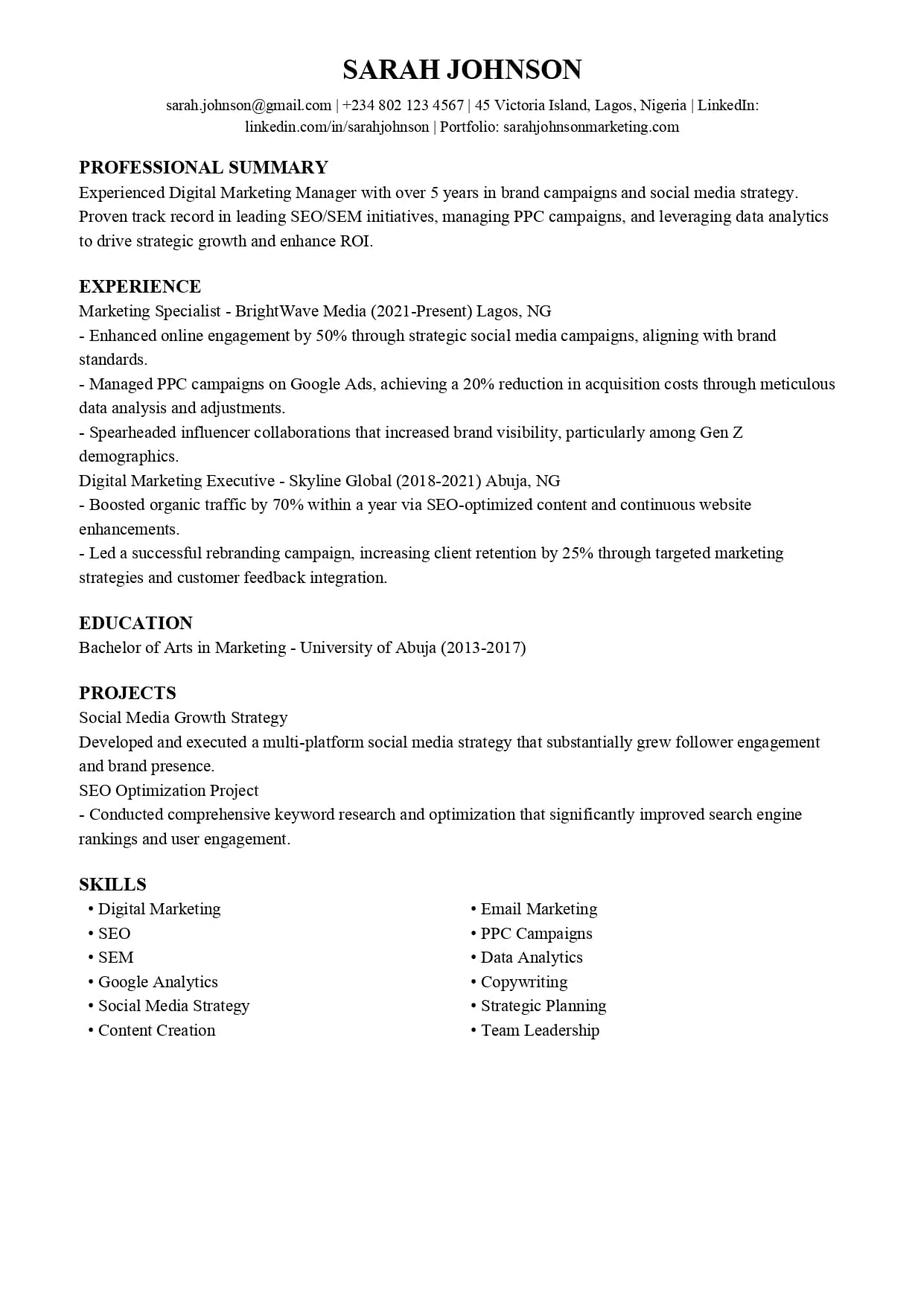
If you have decided that one page is the right length for your situation, structure matters. Here is a layout that recruiters can scan in under ten seconds.
Header: Name, phone, email, LinkedIn URL, and portfolio or GitHub link if relevant. One line.
Professional Summary: Two to three sentences summarizing your expertise, years of experience, and what you are looking for. This is not an objective statement. It is a preview of your value.
Skills: A comma separated list of relevant technical and soft skills. Keep it to one line if possible.
Experience: Reverse chronological order. Each role gets a title, company, date, and two to three bullet points. Start each bullet with a strong action verb. Include metrics.
Projects: Two to four relevant projects. Name, your role, and one to two bullet points describing impact.
Education: Degree, school, and year. Omit your GPA unless you are a recent graduate and it is strong.
This structure fits comfortably on one page for most early and mid career professionals. If you find yourself shrinking fonts to fit, it is time to move to a second page or cut more content.
Common One Page Resume Mistakes
Even with the right template, people make predictable errors when trying to stay on one page.
Shrinking Margins and Fonts
If your font drops below ten points or your margins disappear, you have crossed a line. Recruiters will not squint. They will skip.
Removing All White Space
A wall of text is exhausting. White space guides the eye. A one page resume with breathing room looks more confident than a dense two pager crammed into one.
Hiding Relevant Experience
Some candidates delete a job that does not fit, even if it contains transferable skills. Do not hide your history. Reframe it. Show how an unrelated role taught you leadership, communication, or problem solving.
Final Verdict: Should Your Resume Be One Page?
Yes, if you have less than five years of experience, if you are changing careers and need to hide gaps, or if you are applying to a conservative industry that expects brevity.
No, if you have a deep career history, if you are in a technical field with many tools and certifications to list, or if you are applying for senior roles where scope matters.
The one page resume is not a myth. It is a tool. Like any tool, it works when used for the right job. The goal is not to win a length contest. The goal is to make it obvious, in the shortest time possible, why you are worth interviewing.
If you are unsure whether your current resume is the right length, run it through an AI resume optimizer. It will flag fluff, suggest stronger bullet points, and help you decide whether one page is enough or whether you have enough substance to justify two.