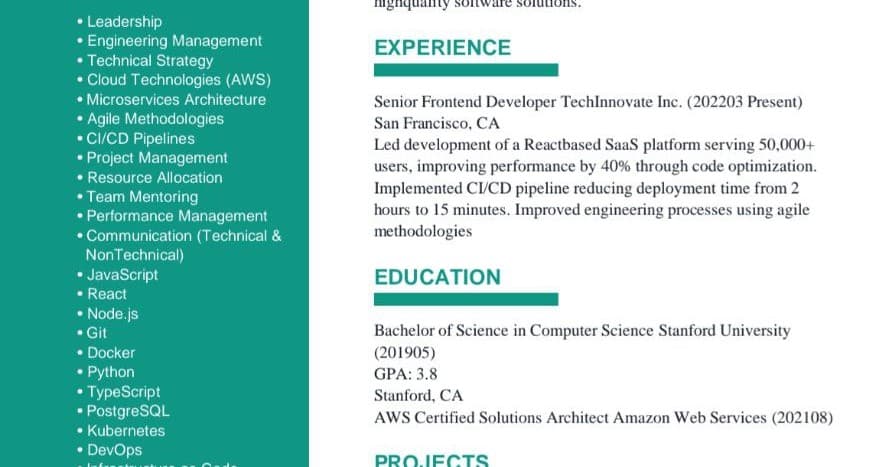
Your skills section is the most scanned part of your resume by both ATS bots and human recruiters. Getting it right means the difference between an interview and being ignored. But here is the problem: listing skills is just the beginning. The real win comes from proving those skills with specific achievements and that is where many resumes fail.
Our data shows candidates who use our AI Resume Builder create skills sections that get more ATS matches because the builder does not just list skills, it automatically generates achievement-based bullet points that prove each skill.
How Many Skills to List on a Resume (The Perfect Number)
This is one of the most common questions we get: "How many skills should I include?" The answer depends on your experience level.
- Entry Level (0-3 years): 6-10 skills total
- Mid Career (4-10 years): 8-12 skills total
- Senior or Executive (10+ years): 10-15 skills total
The key is quality over quantity.
When to List Fewer Skills
The guidelines above work for most resumes, but fewer skills are often better in specific situations. If you are applying for a highly technical role where depth matters more than breadth, listing 5-6 deeply relevant skills is stronger than 12 surface-level ones. If you are a senior executive, your example section should focus on leadership and strategic skills, not a long list of tactical tools. If the job description emphasizes only 3-4 core skills, mirror that focus rather than adding extra fluff. And if space is very tight (a one-page resume for an experienced candidate), prioritize quality over quantity. Recruiters would rather see 6 well-chosen, proven skills than 12 generic ones. When in doubt, include only skills you can immediately prove with a specific achievement in your experience section.
Hard Skills vs Soft Skills: What to Include
Hard Skills (Technical and Job-Specific)
These are measurable abilities specific to your field. What skills to put on a resume depends heavily on your industry.
Common Hard Skills by Industry:
Technology: Python, JavaScript, SQL, AWS, React
Marketing: SEO, Google Analytics, Content Strategy, SEM
Finance: Financial Modeling, Excel (Advanced), QuickBooks, Risk Analysis
Healthcare: EHR Systems, Medical Coding, Patient Assessment, CPR Certified
Soft Skills (Interpersonal and Transferable)
These are how you work and interact with others. Good skills to put on a resume often include a mix of both.
- Communication: Presenting, writing, active listening
- Leadership: Team management, mentoring, decision-making
- Problem-solving: Analytical thinking, creativity, troubleshooting
- Adaptability: Flexibility, learning agility, resilience
Computer Skills for Resume: The Essential List
Computer skills for resume sections are non-negotiable in today's digital workplace. Here is how to categorize them.
Basic Computer Skills (Everyone Should Have)
- Microsoft Office Suite (Word, Excel, PowerPoint)
- Email and Calendar Management
- Web Browsing and Research
- File Management
Intermediate Computer Skills
- Advanced Excel (PivotTables, VLOOKUP, Macros)
- Google Workspace (Docs, Sheets, Slides)
- Project Management Software (Asana, Trello, Basecamp)
- CRM Systems (Salesforce, HubSpot)
Advanced and Technical Computer Skills
- Programming Languages (Python, JavaScript, Java)
- Database Management (SQL, MongoDB)
- Cloud Platforms (AWS, Azure, Google Cloud)
- Data Analysis Tools (Tableau, Power BI, R)
Special Skills for Resume (What Makes You Unique)
Special skills for resume sections can set you apart from other candidates. These include:
Language Skills
- Fluent in Spanish, French, Mandarin, etc.
- Professional proficiency (reading, writing, speaking)
Certifications and Licenses
- Project Management Professional (PMP)
- Certified Public Accountant (CPA)
- Google Analytics Certified
- State-specific professional licenses
Unique Technical Abilities
- Video Editing (Adobe Premiere, Final Cut Pro)
- Graphic Design (Photoshop, Illustrator, Canva)
- Technical Writing
- Public Speaking and Presenting
Where to Put Skills on Your Resume
Placement matters. Here are the optimal strategies.
1. Dedicated Skills Section (Most Common)
A separate section near the top (after the summary or objective). Group by category.
Technical Skills: Python, SQL, Tableau, AWS
Project Management: Agile, Scrum, JIRA, Risk Management
Languages: English (Native), Spanish (Fluent)
2. Integrated Throughout Experience Section
Skills should also appear in your bullet points. Instead of just listing "Project Management" in skills, include: "Managed a $500K project using Agile methodology, delivering 15% under budget."
3. Hybrid Approach (Best Practice)
Use a dedicated section for quick scanning, plus integration in bullet points for proof.
Should You Customize Skills for Each Job?
Absolutely. Here is why customization matters.
The ATS Matching Game
ATS systems score resumes based on keyword matches. If the job description says "Python" and you have "Programming," you might not get full credit.
How to Customize Efficiently
- Extract key skills from the job description
- Match your existing skills to those keywords
- Add any missing but relevant skills you possess
- Remove irrelevant skills to save space
Skills to Add to Resume Based on Experience Level
Entry-Level (0-3 years experience)
Focus: Education, internships, projects, transferable skills
What are some skills to put on a resume? Include coursework, academic projects, volunteer work, and soft skills developed in part-time jobs.
Mid-Career (4-10 years experience)
Focus: Specialized skills, leadership, measurable achievements
Skills to add to resume: Industry-specific tools, management experience, budget responsibility, training and mentoring.
Senior and Executive (10+ years experience)
Focus: Strategic leadership, P and L responsibility, organizational impact
Skills to include: Strategic planning, team building, change management, stakeholder relations, financial oversight.
Common Skills Section Mistakes to Avoid
Listing Too Many Skills
Problem: 20+ skills overwhelm the reader and dilute your strongest abilities.
Solution: Limit to 8-15 of your most relevant skills.
Vague Skill Descriptions
Problem: "Good communication skills"
Solution: Be specific: "Executive presentation skills," "Technical writing," "Cross-functional team communication"
No Proof in Experience Section
Problem: Skills exist in isolation without supporting evidence.
Solution: Every skill should be proven with at least one achievement bullet point.
Outdated Skills
Problem: Listing software no longer used in your industry.
Solution: Keep skills current. Remove anything older than 5-7 years unless it is still highly relevant.
FAQ: Resume Skills Questions
What are some skills to put on a resume if I am changing careers?
Answer: Focus on transferable skills like project management, communication, analysis, leadership, and problem-solving. Frame your past experience in terms of these universal abilities.
How do I list skills I am still learning?
Answer: Use terms like "Familiar with," "Basic knowledge of," or "Currently learning." Be honest about your proficiency level.
Should I include hobbies as skills?
Answer: Only if they are relevant to the job or demonstrate desirable traits. "Competitive chess player" might show strategic thinking for a consulting role.
What if I do not have all the skills listed in the job description?
Answer: Focus on the skills you do have. Many job descriptions are wish lists. If you have 70% or more of the required skills, apply and emphasize your ability to learn quickly.
The Complete Skills Solution: From List to Interview
Remember: skills to put on a resume is just the starting point. The real power comes from:
- Selecting the right skills (8-15 most relevant)
- Proving each skill with specific achievements
- Customizing for each job based on the description
- Optimizing for ATS with the right keywords
- Presenting professionally for human readers