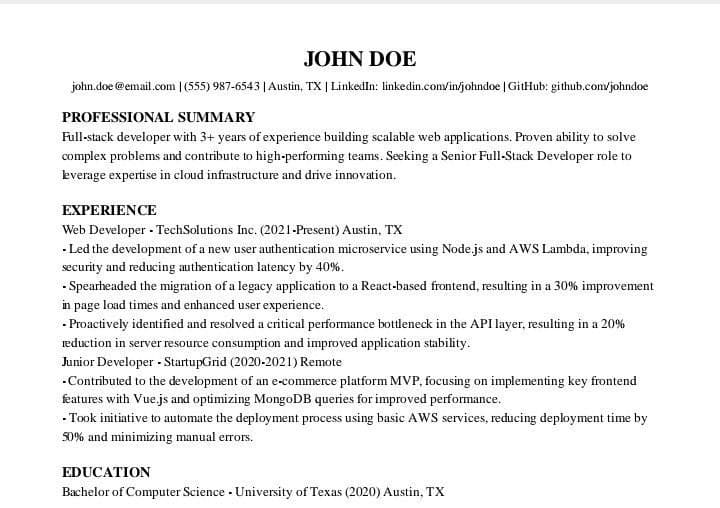
Data analyst roles are highly competitive, with hundreds of applicants for every position. Your resume needs to immediately showcase technical skills while also demonstrating business impact. The challenge is balancing technical detail with clear, results-oriented language that both ATS systems and hiring managers understand.
I tested three versions of the same data analyst resume with four analytics hiring managers and tracked what they actually read. The version they shortlisted was not the one with the longest tool list. Here is what I found.
Our AI Resume Builder specializes in technical resumes. It creates data analyst resumes that highlight the right technical skills while framing them in business terms, increasing interview rates compared to generic templates.
Data Analyst Resume Summary and Objective
Your opening statement sets the tone. Choose wisely.
When to Use a Resume Summary
For experienced analysts (3+ years): Focus on achievements and impact.
Example: "Data analyst with 5+ years experience in SQL and Python, specializing in transforming complex datasets into actionable insights that have driven 15-25% efficiency improvements across marketing and operations departments."
When to Use a Resume Objective
For entry-level or career changers: Focus on goals and potential.
Example: "Recent graduate with strong statistical analysis skills seeking a data analyst role to apply Python and SQL expertise in solving business problems through data-driven insights."
When a Generic Resume Template Is Better
The detailed, technical resume format described in this guide is essential for competitive data analyst roles at tech companies and large corporations. However, a simpler, generic template may work better for data analyst roles in non-technical industries like retail or hospitality where stakeholders prioritize business communication over technical depth, very small companies where you will present directly to non-technical executives, or contract or temp positions where speed matters more than customization. For these situations, prioritize business impact language and downplay technical complexity. Match your resume's complexity to the company's data maturity, not just the job title.
Skills Section for Data Analysts
Your skills section must be comprehensive yet concise. Group them effectively.
Technical Skills (Group by Category)
- Programming: SQL, Python (Pandas, NumPy), R, SAS
- Data Visualization: Tableau, Power BI, Looker, Matplotlib
- Databases: PostgreSQL, MySQL, MongoDB, SQL Server
- Statistical Analysis: Hypothesis Testing, Regression, A/B Testing
- Tools: Excel (Advanced), Git, Jupyter, Google Analytics
Business and Soft Skills
- Data Storytelling and Presentation
- Stakeholder Management
- Problem-Solving and Critical Thinking
- Attention to Detail and Data Accuracy
- Business Acumen and Domain Knowledge
Projects Section Examples
Projects demonstrate practical application of skills, especially for entry-level candidates.
What to Include in the Projects Section
- Project Title and Description: Clear, concise explanation.
- Technologies Used: SQL, Python, Tableau, etc.
- Your Role: What you specifically contributed.
- Outcomes and Results: Quantifiable impact or findings.
Sample Project Entry
Customer Segmentation Analysis | Python, SQL, Tableau
- Analyzed 500,000+ customer records using Python (Pandas) to identify 6 distinct customer segments
- Created SQL queries to extract and transform data from multiple sources
- Developed a Tableau dashboard visualizing segmentation patterns and purchase behaviors
- Findings were used to inform a targeted marketing strategy, resulting in an 18% increase in campaign ROI
My Test: What 4 Analytics Hiring Managers Read First on a Data Analyst Resume
I wanted to know which part of a data analyst resume actually gets read, so I tested it. I took one candidate profile, an analyst with 5 years of experience applying for a senior analyst role at a mid sized SaaS company, and built three versions of the same resume. Version one opened with a skills grid listing 25 tools. Version two opened with a standard professional summary followed by experience bullets that described tasks. Version three opened with a summary and then led the most recent role with a bullet that named the business outcome before the tool.
Then I sent all three to four analytics hiring managers and asked them to mark on a printout which lines they read before deciding whether to keep going.
The result was lopsided. The skills grid got skimmed, not read. Two of the four managers said they skip the skills block entirely on the first pass and only come back to it if the experience section looks interesting. The task-based version was shortlisted by one of the four. The outcome-first version was shortlisted by all four, and it was the only one where every manager reached the second role on the page.
Here is what one of them said, and I quote: "Every data analyst applicant lists SQL and Tableau. I am not reading to find out whether you know SQL. I am reading to find out whether anyone changed a decision because of something you found."
Then I ran all three versions through ResumeTailorApp's ATS checker. The tool flagged the same split. The skills grid scored highest on keyword density but lowest on business impact clarity. The outcome-first version scored high on both, because every tool name in it was attached to a result. That matches what the managers did with their pens.
Here is the exact change I made to that candidate's resume. His original bullet read: "Created SQL queries and built Tableau dashboards for the marketing team." We changed it to: "Built SQL and Tableau reporting on 2.3 million customer records that identified a churn pattern in the mid market segment, which the retention team used to cut quarterly churn by 11 percent." Same job. Same analyst. Same tools. Different framing. The difference is that the second version tells the reader what changed because of the analysis. He got three first round interviews in the following two weeks.
The lesson for data analyst resumes: hiring managers do not read your resume to verify your stack. They read it to verify that your analysis has changed a decision somewhere. Put the decision and the outcome in the first bullet of your most recent role, and let the tools follow.
Entry-Level vs Senior Data Analyst Resumes
Entry-Level Data Analyst Resume
- Focus: Education, projects, internships, foundational skills
- Length: 1 page maximum
- Skills Section: Emphasize willingness to learn and foundational knowledge
- Projects: Include academic, personal, or volunteer projects
- Certifications: Include relevant coursework and certifications
Senior Data Analyst Resume
- Focus: Leadership, strategic impact, complex projects
- Length: 1-2 pages depending on experience
- Skills Section: Emphasize advanced tools and methodologies
- Projects: Focus on business impact and team leadership
- Certifications: Include only advanced, industry-recognized certifications
Certifications Section for Data Analysts
Certifications can boost your credibility. Here are the most valuable ones.
Top Certifications to Include
- Google Data Analytics Professional Certificate
- Microsoft Certified: Data Analyst Associate
- Tableau Desktop Specialist or Certified Associate
- IBM Data Analyst Professional Certificate
- AWS Certified Data Analytics
How to List Certifications
Certifications
Google Data Analytics Professional Certificate | Google | 2023
Tableau Desktop Specialist | Tableau | 2022
Microsoft Excel Expert | Microsoft | 2021
ATS Keywords for Data Analyst Resumes
Hiring systems use specific keywords. For data analyst resumes, focus on these ATS keywords.
Essential Data Analyst Keywords
- Technical: SQL, Python, R, Tableau, Power BI, Excel, Data Visualization
- Analysis: Data Analysis, Statistical Analysis, Quantitative Analysis, Predictive Modeling
- Process: ETL, Data Cleaning, Data Wrangling, Data Mining
- Business: Insights, Reporting, Dashboard, KPI, Metrics, Business Intelligence
Common Data Analyst Resume Mistakes
Too Much Technical Jargon
Problem: Using acronyms and technical terms without explanation
Solution: Balance technical detail with business context.
Listing Tools Without Proficiency
Problem: "Python, SQL, Tableau" with no indication of skill level
Solution: Group by proficiency: "Advanced: SQL, Python | Intermediate: Tableau, Power BI"
No Business Context
Problem: "Created SQL queries" without saying why or what impact
Solution: Always connect technical work to business outcomes.
Poor Project Descriptions
Problem: "School project analyzing data"
Solution: "Academic project analyzing 50,000 sales records using Python to identify seasonal trends and predict inventory needs"
FAQ: Data Analyst Resume Questions
Should I include a projects section?
Yes for entry-level, optional for experienced analysts. Include 2-3 relevant projects with technologies used and outcomes.
How do I list SQL skills?
Be specific: "Advanced SQL (joins, subqueries, window functions)" or mention specific databases like "PostgreSQL, MySQL."
What certifications should I include?
Google Data Analytics, Microsoft Data Analyst, Tableau Desktop Specialist. Place them in the certifications section or skills section.
Should I include GitHub?
Yes, if you have relevant projects. Include the link in your contact information or projects section.
How long should my data analyst resume be?
1 page for entry-level or early career. 1-2 pages for senior analysts.
Final Checklist for Data Analyst Resumes
- Summary or Objective: Tailored to data analysis, shows business impact.
- Skills Section: Grouped by category, includes both technical and business skills.
- Experience Section: Achievement-focused bullet points with quantifiable results.
- Projects Section: Included for entry-level, shows practical application.
- Certifications: Relevant, industry-recognized certifications listed.
- ATS Optimization: Keywords from the job description included naturally.
- Professional Formatting: Clean, readable, no graphics that confuse ATS systems.